To Haggle or Not to Haggle? A Traveler's Guide to Bargaining Around the World


If you've ever wondered whether you're supposed to bargain while shopping during a vacation, you're not alone.
For many travelers, their first experience with bargaining happens while visiting Mexico, the Caribbean, or a cruise port where colorful market stalls line the streets and prices aren't always posted.
You find the perfect souvenir. Maybe it's a handcrafted piece of jewelry, a colorful painting, a woven basket, or a beautiful piece of pottery. You ask the price.
The vendor smiles and gives you a number.
Now what?
Do you pay the asking price? Make a counteroffer? Walk away? What if bargaining is expected? What if it isn't?
Over the years, I've had clients tell me they found something they absolutely loved while traveling but left it behind because they weren't comfortable with the bargaining process. They weren't sure whether negotiating was appropriate, and rather than risk an awkward interaction, they simply walked away.
In at least a couple of cases, those travelers later told me they regretted not buying the item.
The good news is that bargaining doesn't have to be intimidating. Understanding a few basic customs can help you shop with confidence, avoid cultural missteps, and sometimes even enjoy one of the most memorable experiences of your trip.

Bargaining vs. Bartering: Are They the Same Thing?
Many people use the terms interchangeably, but technically they're different.
Bargaining is negotiating the price of an item using money. The buyer and seller discuss the price and eventually agree on an amount.
Bartering is exchanging goods or services instead of money. For example, trading a basket of apples for a handmade blanket would be bartering.
When travelers talk about "bartering" in a market, they're almost always referring to bargaining.
So while the terms are often used casually, bargaining is what most travelers encounter.

Why Bargaining Exists
Many Americans view shopping as a straightforward process. The item has a price tag, you decide whether you want it, and you either buy it or you don't.
In many parts of the world, however, bargaining has been part of commerce for centuries.
It's About More Than Price
The negotiation itself is often viewed as a normal social interaction. It's less about winning and more about arriving at a price that feels fair to both buyer and seller.
Think of it as a conversation rather than a competition.
In some cultures, discussing the price is simply part of the shopping experience. The interaction can be friendly, enjoyable, and even entertaining.
That's a very different mindset than many Americans are accustomed to.

Marketplace, Souk, or Bazaar?
As you travel, you'll hear several different terms used to describe shopping areas.
The broadest term is marketplace. A marketplace is simply any location where buyers and sellers come together to exchange goods. Farmers' markets, flea markets, artisan markets, and traditional shopping districts all fall under this category.
You may also hear the word souk. A souk is a traditional marketplace commonly found in North Africa and parts of the Arab world. Souks are often made up of narrow winding streets lined with small shops and stalls selling spices, textiles, jewelry, leather goods, ceramics, and other handcrafted items.
Then there's the bazaar. A bazaar is very similar to a souk but is more commonly associated with Turkey, Iran, Central Asia, and parts of the Middle East. Bazaars are often larger and may be partially or completely covered.
The important thing to remember is that all souks and bazaars are marketplaces, but not all marketplaces are souks or bazaars.
And while bargaining is often associated with souks and bazaars, it can also be common in artisan markets and local craft markets throughout many parts of the world.

The First Rule: Pay Attention to Where You're Shopping
If there's one takeaway from this article, it's this:
Don't focus so much on the country you're visiting. Focus on the type of place where you're shopping.
Bargaining is often common in:
Open-air markets
Souks
Bazaars
Artisan markets
Flea markets
Independent vendor stalls
Bargaining is usually not expected in:
Department stores
Shopping malls
Supermarkets
Museums
Airport shops
Cruise ship stores
Most chain retailers
If an item has a clearly marked price tag in an established retail store, the listed price is usually the price.
If a vendor quotes a price after you've shown interest in an item, there may be room for negotiation.

Mexico and the Caribbean: Where Many Travelers Get Their First Taste of Bargaining
For many North American travelers, Mexico and the Caribbean offer an introduction to bargaining.
Local craft markets, artisan stalls, and straw markets often sell handmade goods where negotiating may be welcomed. This can feel unfamiliar at first because most of us don't negotiate prices at home.
The key is to approach the interaction respectfully and remember that you're participating in a shopping tradition that may be very different from your own.

North Africa and the Middle East: Shopping as a Cultural Experience
In destinations such as Morocco, Egypt, and Turkey, shopping can become an attraction in its own right.
Traditional souks and bazaars are often vibrant, colorful places filled with sights, sounds, and aromas. Vendors may invite you to sit down, share a cup of tea, and chat before discussing prices.
For visitors accustomed to quick transactions, this can be surprising.
The experience often becomes about much more than making a purchase.
My favorite bargaining experience took place during a port stop in Kusadasi, Turkey. After touring the ancient city of Ephesus, I spent some time wandering near the ship, soaking in the atmosphere and doing a little shopping. I wandered into a shop specializing in leather goods and fine jewelry.
The elderly proprietor invited me to sit down and share a glass of hot tea with him. My Turkish vocabulary consisted mainly of "please" and "thank you," while his English was limited, but somehow we managed a pleasant conversation. Naturally, the discussion eventually turned to shopping.
By the end of my visit, I had purchased a black leather pocketbook and a tri-color gold necklace and earring set. I no longer remember what I paid, but I do remember that we both seemed happy with the outcome.
More than the purchase itself, I remember the experience. The pocketbook is a little worn after all these years, but I can't bring myself to part with it because every time I see it, I'm reminded of that afternoon in Turkey. I still wear the earrings regularly, although the necklace no longer fits.
Looking back, I remember the tea, the conversation, and the shopkeeper's kindness far more than the final price.
Sometimes the conversation, the hospitality, and the interaction become just as memorable as the item you eventually bring home.

Asia: One Continent, Many Different Customs
Asia offers some of the greatest contrasts when it comes to bargaining.
In countries such as India, Thailand, Vietnam, Cambodia, and Indonesia, bargaining may be common in traditional markets and street stalls.
However, destinations such as Japan, Singapore, and South Korea generally use fixed pricing in everyday retail settings.
A bargaining strategy that works perfectly in a market in Bangkok may not be appropriate in Tokyo.

Knowing When Not to Bargain
Knowing when not to bargain is just as important as knowing when you can.
Generally speaking, bargaining is usually not appropriate in department stores, shopping malls, supermarkets, restaurants, museums, airport shops, and most chain stores. If an item has a clearly marked price tag in a traditional retail setting, the listed price is typically the final price.
It's also important to respect vendors who clearly state that their prices are fixed. Good travelers adapt to local customs rather than assuming every shopping experience works the same way.
When in doubt, take a moment to observe what others are doing. Watching how local shoppers interact with merchants can often tell you more than any guidebook.

Five Tips for Successful Bargaining
Start With a Smile
Bargaining is often a social interaction. A friendly attitude can make the entire experience more enjoyable.
Learn the Currency
Knowing roughly how much the local currency is worth can help you determine whether a price is reasonable.
Know What You're Buying
Take a few minutes to compare quality and prices before making an offer.
Make Reasonable Counteroffers
Offering an extremely low amount may be viewed as disrespectful and usually isn't effective.
Be Willing to Walk Away
Sometimes the best price appears only after you've thanked the vendor and started to leave.
Bargaining Etiquette Matters
Regardless of where you're traveling, a few basic principles apply almost everywhere.
Be respectful.
Be friendly.
Never insult the merchandise.
Don't negotiate if you have no intention of buying.
If you agree on a price, honor the agreement.
This last point is important.
In many cultures, reaching an agreement creates an informal understanding between buyer and seller. Walking away afterward may be considered poor manners.

The Biggest Bargaining Mistake Travelers Make
Surprisingly, it's not overpaying.
It's treating bargaining like a battle.
Some travelers become so focused on getting the absolute lowest price possible that they forget they're interacting with another human being.
The person selling that handcrafted item may have spent hours—or even days—creating it. In many destinations, market vendors rely heavily on tourism to support their families.
That doesn't mean you shouldn't negotiate when it's appropriate.
It simply means that respect should always be part of the process.
A successful bargaining experience should leave both parties feeling good about the outcome.
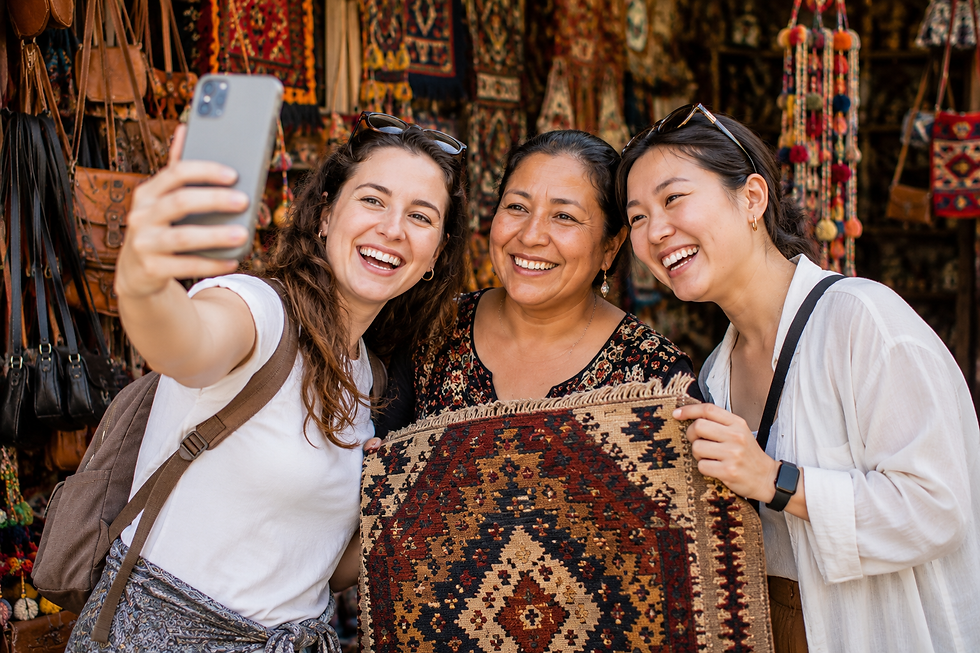
If you've enjoyed a fun shopping experience and purchased something special, consider asking the merchant if they'd like to join you for a selfie. Years later, the photo may become just as treasured as the item you brought home.
Turn a Purchase Into a Memory
One of the things I love most about travel is the opportunity to connect with people from different cultures.
Years from now, you probably won't remember whether you paid $18 or $20 for a souvenir.
You'll remember the experience.
In fact, if you've purchased something special or enjoyed a particularly fun interaction with a vendor, consider asking if they'd be willing to take a selfie with you and your purchase.
Those photos often become some of the most meaningful travel memories. They remind you not only of what you bought, but of the person who sold it to you and the cultural experience you shared.
Travelers sometimes become so focused on getting the absolute lowest price that they forget the human side of the transaction.
Fair bargaining and hard bargaining are not always the same thing.

Whether you're shopping in Mexico, Morocco, Turkey, Thailand, or beyond, the goal isn't simply to get the lowest price. It's to enjoy the experience, respect local customs, and perhaps come home with a great story to tell.
Final Thoughts
So, should you haggle or not haggle?
The answer depends on where you are, what you're buying, and how the local culture approaches shopping.
Pay attention to your surroundings. Observe how locals interact with vendors. Be respectful. Be flexible. And remember that bargaining is often about much more than saving a few dollars.
Done thoughtfully, it can become one of the most enjoyable—and educational—parts of traveling.
Have you ever negotiated for a souvenir while traveling? Did you walk away with a great deal, a memorable story, or both? I'd love to hear about your experience in the comments.
Happy Traveling!
-Connie


Comments