The Secrets to Staying Hydrated When You Fly


Staying hydrated when flying is one of the easiest ways to reduce jet lag, avoid fatigue, and feel better when you land. Airplane cabins are extremely dry, which can quickly lead to dehydration, low energy, and dry skin. After years of flying and trying different tips, I’ve found a few simple habits that seem to make a difference.
Flying just dries you out—more than you expect. Even if you’re just sitting there, your body is steadily losing moisture the entire time, particularly because of how dry the air is in the plane. That’s usually why you land feeling tired, foggy, maybe with a headache, dry skin, and zero energy when you get to your destination.
Why You Need to Stay Hydrated When Flying (Plus My Best Tips for Feeling Better on a Plane)
Over time, I’ve read and tried a lot of flying tips—some helpful, some not—and these are the ones that work for me that I want to share with you.

Start with real hydration (not just one cup of water):
Bring a reusable water bottle and fill it after security. I try to sip consistently throughout the flight instead of chugging randomly. Think small, steady sips every 15–20 minutes, especially on longer flights.
On flights over a few hours, you might want to add electrolytes once. It helps your body actually absorb and hold onto the water instead of just running through you.
I also try not to overdo it on coffee or alcohol. I’m not cutting it out completely, but both will dehydrate you faster in an already dry environment—so if I have either, I make sure I’m drinking extra water alongside it.
Tip:
You can’t bring liquids over 3.4 ounces through security—but you can bring an empty reusable water bottle. I always pack one and fill it after security at a hydration station (or a water fountain if needed). It saves money, keeps you hydrated, and lets you avoid tiny cups on the flight.
Bonus tip:
Fill it right before boarding so your water stays cold longer—and if you like it really cold, ask for a cup of ice on the plane and top it off.
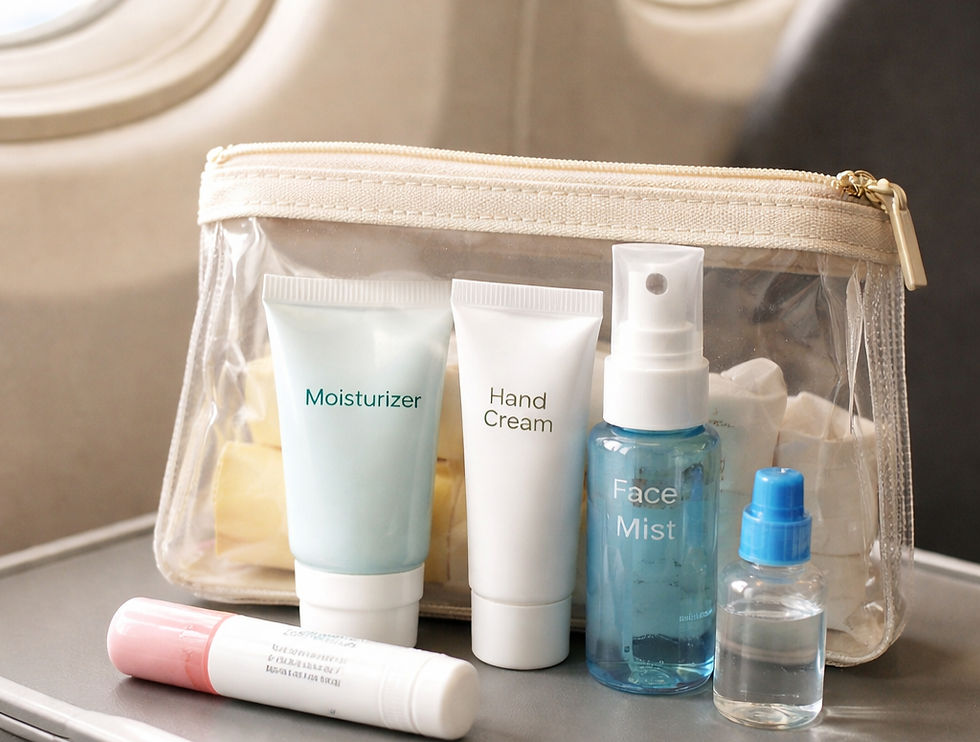
Take care of your skin—it makes a bigger difference than you think:
Hydration isn’t just internal. The dry cabin air hits your skin fast. Using a simple moisturizer before boarding and once during the flight helps a lot. Lip balm is essential unless you want to deal with dry, cracked lips by the time you land.
I’ve also found that a facial mist helps keep my skin from feeling tight, and I always bring hand cream. It’s not about doing a full routine—it’s just basic maintenance so you don’t feel completely dried out. And, frankly, it's also all a chore to kill a few minutes of "plane boredom."
If you wear contacts or spend a lot of time looking at screens, eye drops are worth bringing too. Dry eyes can sneak up on you mid-flight.
Sample Products:
(Provided as examples. I don't use these, nor do I have any affiliation with them or Amazon.)

Yes, drinking water (and getting up) is actually part of the strategy:
One thing I didn’t think about at first—hydrating properly means you’ll have to get up to use the bathroom more. That’s actually a good thing.
Sitting for long periods can slow circulation and leave you feeling stiff, swollen, and uncomfortable. Getting up every hour or two—even just to stand or walk the aisle briefly—helps keep your blood flowing and prevents that “stuck” feeling when you land.
I also try to move a little in my seat—ankle rolls, stretching my legs, flexing my feet. It’s simple, but it helps more than you’d think, especially on longer flights.

Dress and prep in a way that supports your body:
What you wear matters more than people think. I always go for loose, comfortable layers so I can adjust easily if the temperature changes. Tight clothing just makes everything worse when you’re sitting for hours.
On longer flights, I’ll wear compression socks—they help with circulation and reduce swelling in your legs and feet.
Food also plays a role. Super salty snacks and heavily processed foods can make you feel more bloated and dehydrated. I try to keep it balanced and, if I can, include something with water content.

Small habits, big difference:
None of this is complicated, but it adds up. Drink water regularly, take care of your skin, move around when you can, and be a little mindful of what you’re putting into your body.
After trying a lot of different flying advice over the years, these are the habits that actually stick for me—and the ones that make the biggest difference in how I feel when I land. You don’t need to do everything perfectly, but even a few of these will make flying a lot more comfortable.
More reading:
I'm all for anything that makes flying more comfortable and less of a hassle. How about you?
Happy Traveling!
-Connie


This article feels simple and easy to follow from start to finish. I tried a Click Test to measure my CPS score and improve my clicking speed. It also helps improve mouse control, clicking consistency, and fast clicking performance during daily practice sessions.